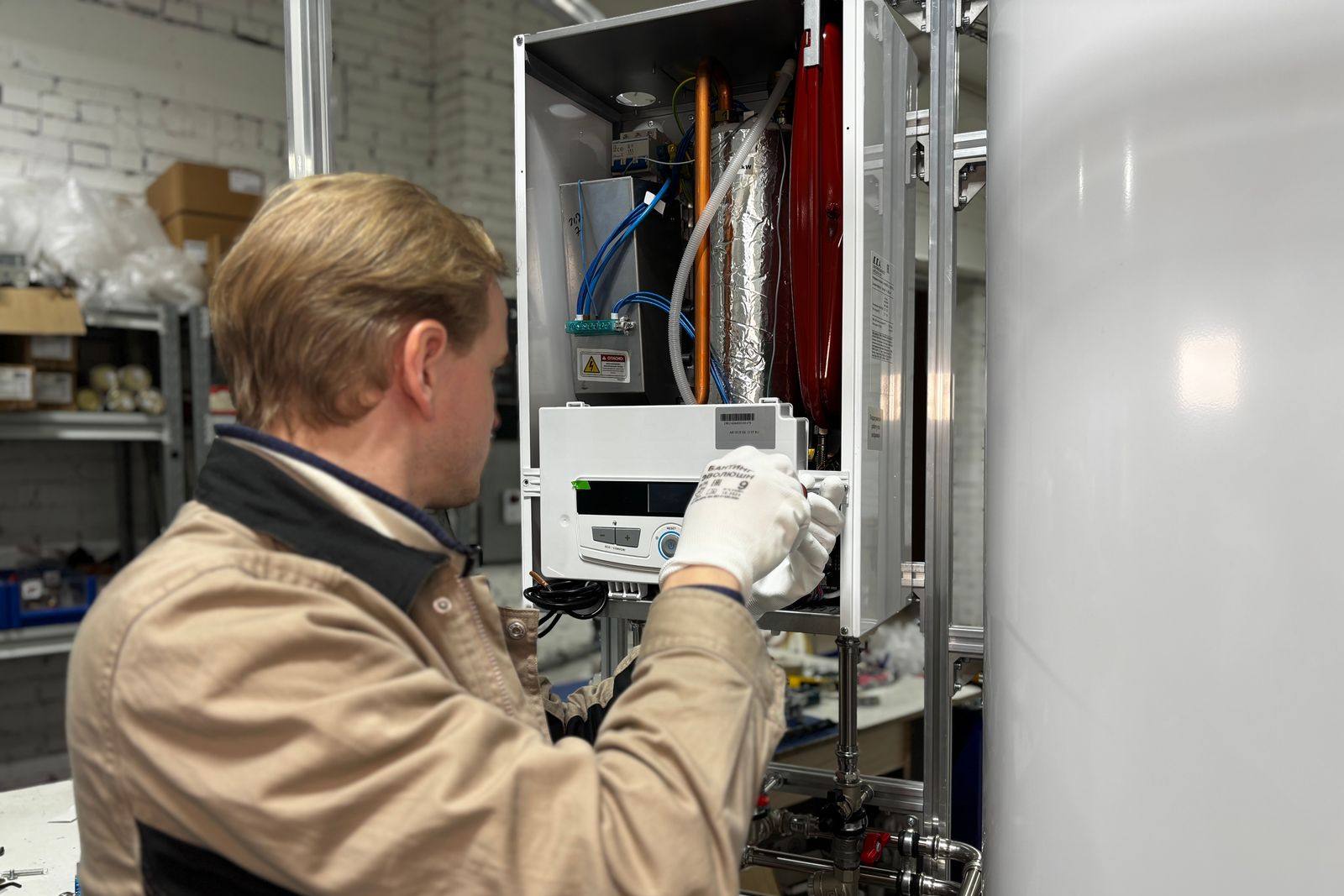
Water heater repair across Gainesville
Gainesville sits on the southern shore of Lake Lanier in the foothills of the Blue Ridge Mountains, a northeast Georgia city of hot, humid summers and mild winters with occasional hard freezes. The lake shapes the area: newer subdivisions spread around its arms, older homes cluster near downtown, and the humid air keeps everything damp. Water heaters here usually sit in a garage, a utility closet, or an attic — and in a lakeside home, often in a garage that stays humid most of the year.
No hot water this morning, a leak spreading across the floor, or a heater that keeps rumbling? Start with the symptom below — each one points to the likely cause, and to whether it is usually a repair or a replacement. Repair requests are accepted in all 5 Gainesville ZIP codes where coverage is verified: 30501, 30503, 30504, 30506, and 30507. Requests from these ZIP codes are shared with independent local water heater providers.
Common water heater problems in Gainesville
No hot water at all
On a gas heater, the usual causes are a pilot light that will not stay lit, a failed thermocouple or gas control valve, or a tripped safety device. On an electric heater, the usual causes are a failed heating element or thermostat, or a tripped breaker. A provider diagnoses which component failed before replacing anything, because the symptom alone does not identify the part.
Not enough hot water
A heater that runs out too quickly often has sediment build-up at the bottom of the tank. Hall County water is moderately hard, so mineral sediment settles at the bottom of tank heaters and scale forms on tankless heat exchangers. Sediment insulates the water from the heat source and shrinks the usable capacity of the tank. A broken dip tube — the pipe that sends cold water to the bottom of the tank — produces the same symptom, as does a failing lower element on an electric unit. Flushing the tank and checking the anode rod are part of the diagnosis.
Leaking water heater
Water pooling around the base of a tank is serious. Leaks from the temperature-and-pressure relief valve, the drain valve, or a pipe fitting can often be repaired. A leak from the tank body itself usually cannot be: once a steel tank rusts through, replacement is the only reliable fix. If you see water spreading, turn off the water supply to the heater, turn off the gas or power, and request assistance.
Rumbling, popping, or banging noises
These sounds are almost always sediment. Mineral deposits harden into a layer at the bottom of the tank; when the burner fires, steam bubbles force their way through the sediment and make the popping sound homeowners describe. Flushing can help if the sediment has not hardened, but heavy build-up sometimes cannot be fully removed — which is why annual flushing matters here more than in soft-water cities.
Rusty or smelly hot water
Rust-coloured hot water that clears after running usually points to a failing anode rod or internal tank corrosion. A rotten-egg smell in hot water only (not cold) is typically caused by bacteria reacting with the anode rod in the tank. Both problems are diagnosed at the heater, not at the water main.
Gas, electric, and tankless — the repair is different
Gas and electric heaters share symptoms but not causes. A gas heater's pilot, thermocouple, burner, and gas valve have no equivalent in an electric unit, and an electric unit's elements and thermostats have no equivalent in a gas unit. Tankless heaters are different again: their common failures are scale build-up on the heat exchanger, ignition and sensor faults, and error codes that require the manufacturer's diagnostic sequence. A repair request should always say which type of heater you have, and roughly how old it is.
What a repair visit involves
A provider typically inspects the heater and its connections, tests the burner or elements, checks the thermostat settings, the relief valve, and the venting or flue, and looks for signs of corrosion or sediment. After diagnosis, the provider explains the fault, the options — repair or replace — and the price before doing the work. Replacement is recommended when the tank is leaking, when the unit is past its expected life and needs a major part, or when the repair would cost a large share of a new unit.
Gainesville homes and their heaters
Housing in Gainesville spans older homes near downtown, mid-century houses across the city, and newer subdivisions around Lake Lanier and in Flowery Branch and Oakwood. Older homes often have the heater in a tight closet or an uninsulated garage, while newer homes tend to put it in the garage with pipes running through a hot attic — where summer heat reaches them and winter cold snaps can too. The home's era and the heater's spot shape what goes wrong.
Frequently Asked Questions
How do I know if my water heater needs repair or replacement?
Repair is usually right for a newer heater with a single failed part — a thermostat, element, thermocouple, or valve. Replacement is usually right when the tank leaks, the heater is 10–12 years old or more and needs a major repair, or repairs keep repeating.
My water heater makes a popping noise. Is that dangerous?
It is usually sediment, not an immediate danger, but it means the heater is working harder than it should and its life is shortening. Have it flushed and inspected rather than waiting for it to fail.
How long does a repair take?
Many single-part repairs are completed in one visit. Diagnosis time depends on the fault; the provider who responds to your request can give a better estimate once the problem is described.
Do you serve all of Gainesville?
Requests are accepted from the 5 Gainesville ZIP codes listed above. Nearby cities with their own pages are Flowery Branch, Oakwood, Chestnut Mountain.